
评估 APEX EDS 软件中无标样 EDS 分析的准确性
前言
使用能量色散 X 射线光谱(EDS)进行分析的一项基本任务是定量确定样品的元素组成。由于定量对EDS分析的重要性,我们非常谨慎地开发了强大的分析模型,用来准确地确定样品的成分。在这篇应用指南中,我们将介绍EDAX® APEX™ 3.0 EDS Standard和Advanced软件中EDS无标样定量分析的性能结果。
结果与讨论
在定量分析过程中,我们分析一个特定的EDS谱,以确定样品中存在的元素的重量或原子百分比。过去,我们发表了几篇文章来解释这个的详细过程1, 2, 3, 但总的来说,对于无标样分析,样品中存在的元素的X射线特征与轫致辐射背景是相互分离的。然后,应用迭代算法来校正激发效率(也是一次电子能量的函数)、样品中产生的 X 射线的自吸收、通过二次 X 射线荧光可能增强 X 射线线系强度以及探测器效率,最终将净 X 射线强度转换为元素组成。我们在迭代算法中使用的模型(归一化无标样 eZAF 校正分析),随着对我们对 X 射线产生、发射和探测的物理过程有更深入的了解4,也一直在不断发展。
我们在发布新的 APEX 软件版本之前,系统性地评估了从 60 多种认证标样(包括矿物、金属合金和二元化合物等)上收集的EDS谱来验证 APEX EDS Standard 和 Advanced 的分析性能。我们通过将样品中存在的每种元素 i 的测量成分与已知成分之间的绝对差相加来确定总绝对误差:
公式1。

Equation 1.
图 1 展示了 APEX 软件版本中通过无标样 eZAF 校正在成分分析准确性方面取得的结果,从这个结果中我们可以看到APEX EDS 3.0 版本软件在定量准确性方面的显著变化。此外,APEX EDS Advanced 软件通过使用计算物理模型得到的轫致辐射背景,而不是 APEX EDS Standard 软件和其他市售分析软件中使用的数学过滤方法 (SNIP),从而提高了准确性。图 2 显示了所分析的一系列标样定量结果的准确性在不同APEX软件版本中的变化。

APEX EDS 标准软件和其他市售分析软件。 图 2 显示了所分析的一系列标准的改进。
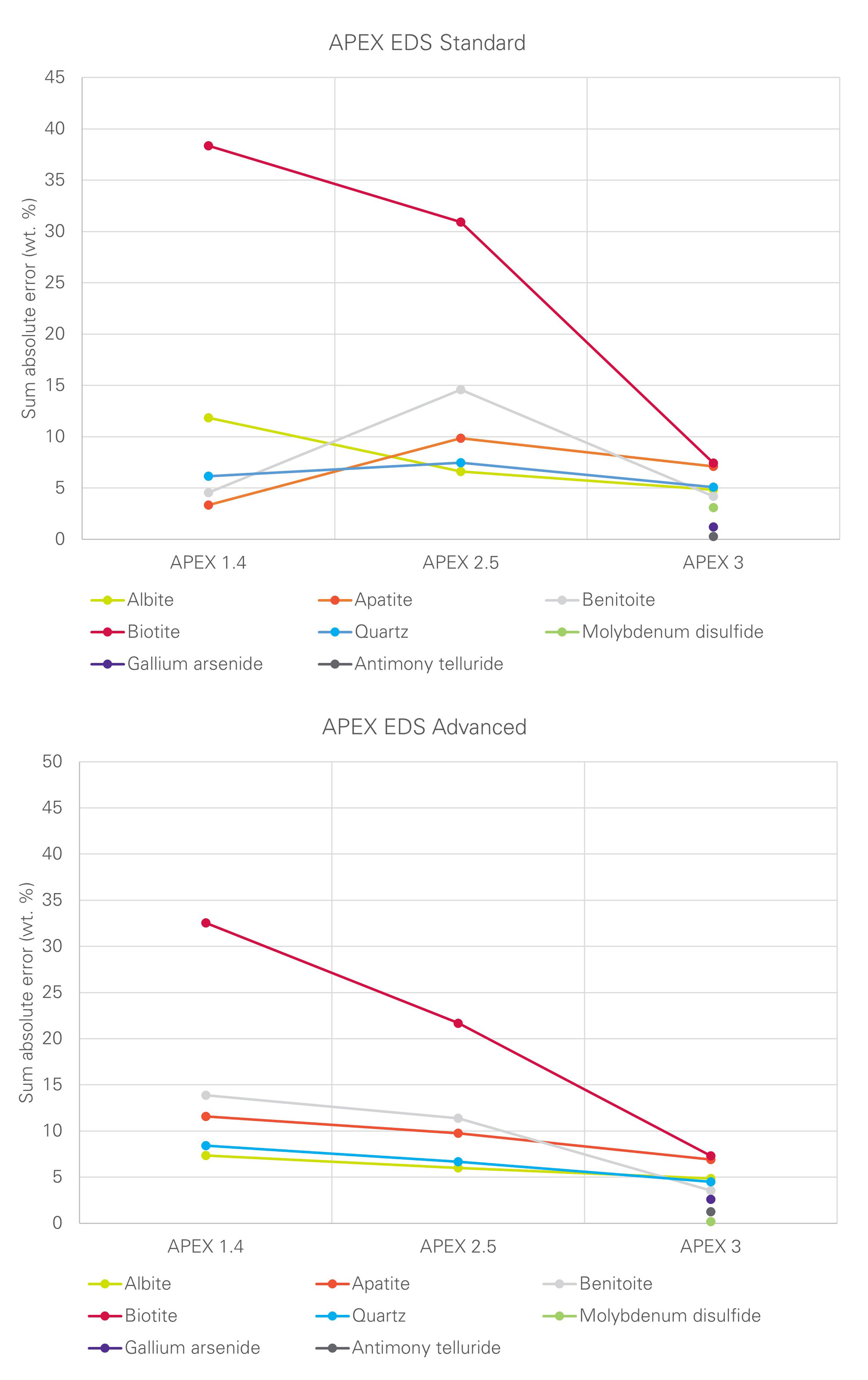
Figure 2. Error in the analysis of selected standards.
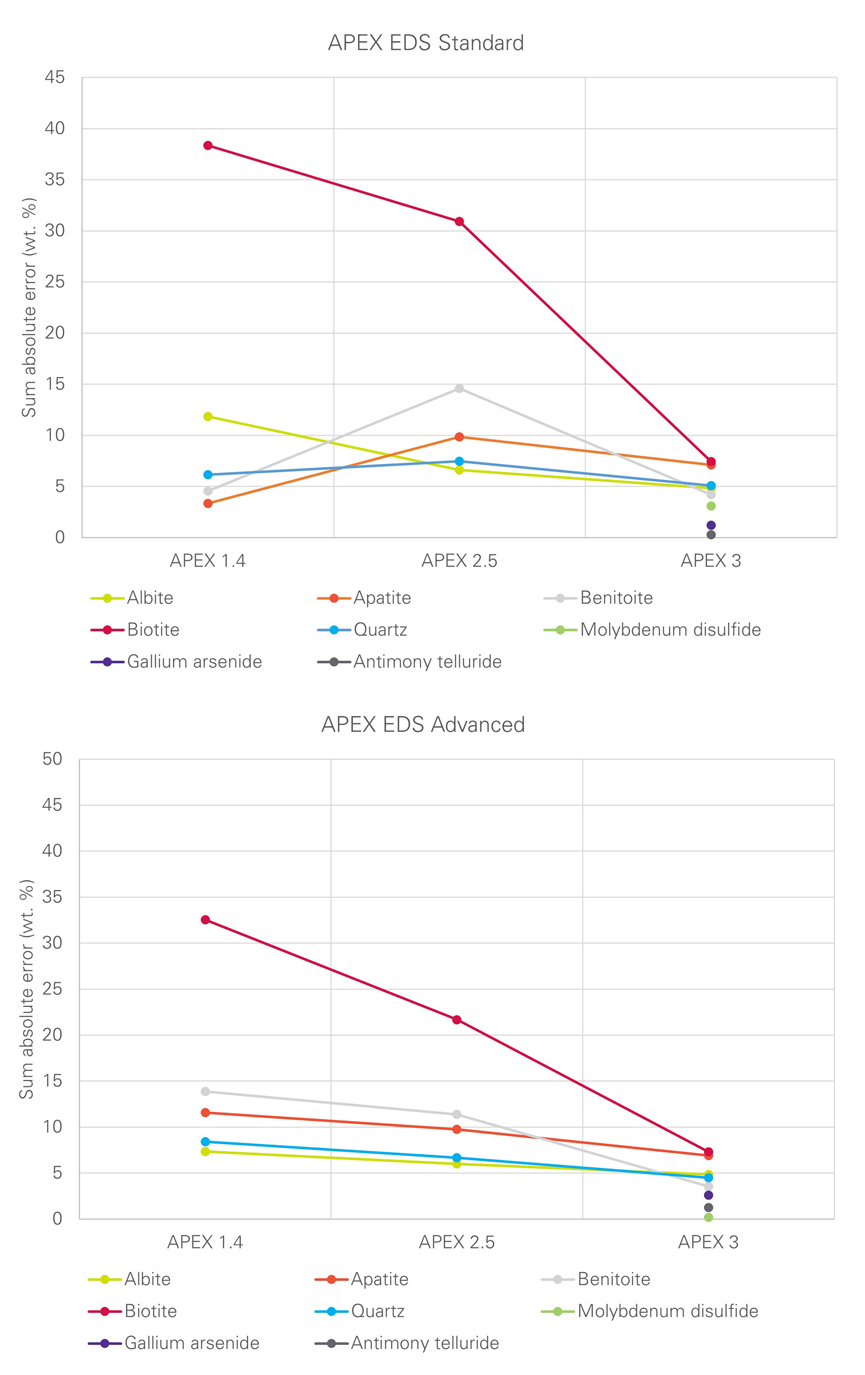
图2. 所选标样分析中的误差。
总结
从图中可以看出,近年来APEX EDS 软件中使用 eZAF 校正的无标样定量分析的准确性得到了显著进步。但是,只有您才能确定这样的精度水平是否足够应对您面临的分析挑战。如果没有,APEX EDS Advanced 软件还支持使用标准定制系数(standards customized coefficients ,SCC)进行 eZAF 无标样分析(这是一种基于当前设备优化迭代模型的经验数据库)或全标准定量 (full standards quantification ,FSQ) 提供进一步改进的可能性。
参考文献
- Ways to improve the EDS quantitative results accuracy: Efficiency and eZAF SCC database. EDAX Insight Vol. 19, Issue 3. September 2021.
- Ways to improve the EDS quantitative results accuracy: eZAF MACC database and correction avoidance. EDAX Insight Vol. 19, Issue 4. December 2021.
- Ways to improve EDS quantitative results accuracy: FSQ and SmartStandards. EDAX Insight Vol. 19, Issue 4. December 2021.
- F. Eggert. Abilities towards improved accuracy in EPMA. Microscopy and Microanalysis (M&M) 2021.
References
- Ways to improve the EDS quantitative results accuracy: Efficiency and eZAF SCC database. EDAX Insight Vol. 19, Issue 3. September 2021.
- Ways to improve the EDS quantitative results accuracy: eZAF MACC database and correction avoidance. EDAX Insight Vol. 19, Issue 4. December 2021.
- Ways to improve EDS quantitative results accuracy: FSQ and SmartStandards. EDAX Insight Vol. 19, Issue 4. December 2021.
- F. Eggert. Abilities towards improved accuracy in EPMA. Microscopy and Microanalysis (M&M) 2021.